16:18

The clockwinding tradition originated when John Rigby and Sons, Ltd. of Manchester, England, presented the Wire Association with a 400-day grandfather clock at its Annual Convention in Pittsburgh, Pennsylvania, on October 20, 1948. The gesture, which represented a group of 32 companies from Great Britain, was made in appreciation of the support given by the U.S. wire industry to Great Britain during World War II.
Each year a representative from the U.K. makes the trip to the U.S. to participate in the annual ceremony that commemorates the friendship and communication between the two nation...
14:25
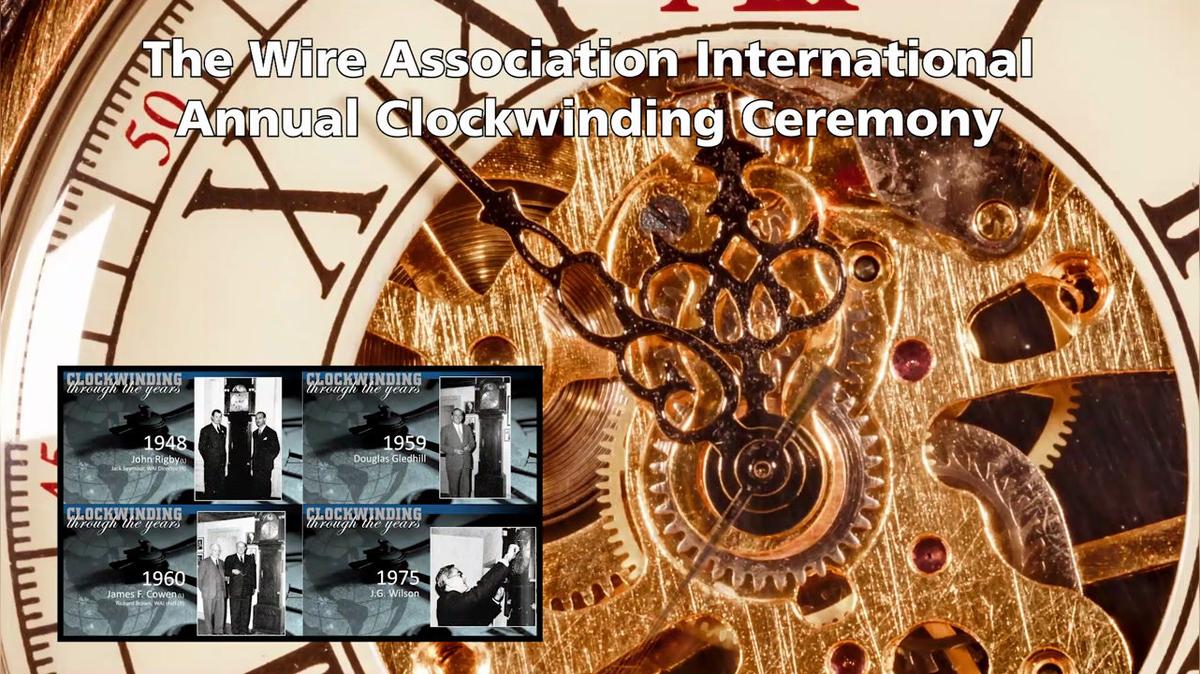
The clockwinding tradition originated when John Rigby and Sons, Ltd. of Manchester, England, presented the Wire Association with a 400-day grandfather clock at its Annual Convention in Pittsburgh, Pennsylvania, on October 20, 1948. The gesture made in appreciation of the support given by the U.S. wire industry to Great Britain during World War II. Each year a representative from the U.K. makes the trip to the U.S. to participate in the annual ceremony that commemorates the friendship and communication between the two nations. This year, Laurence Mutkin, the Upper Warden of the Worshipful Co...
16:12

Walther Van Raemdonck Part 1
06:48

Walther Van Raemdonck Part 2
01:37:00

This presentation details the Zero Harm / Safe Operations initiative, offering a perspective on safety from outside the wire industry that chronicles successes under the most dangerous conditions. Injuries and incidents don’t just happen—they happen because we fail to manage risk to the lowest possible level. How people approach and do work does make a significant difference. Organizations achieve safety excellence through creating distinctive behaviors through use of systems. The four distinctive behaviors are: Plan Work with Risk Management, Accept Accountability, Take Care of Each Other,...
01:28:00

This webinar addresses principles of annealing, annealing of copper and aluminum wire, and annealing problems. Specific topics include definitions, structure—property changes, general concepts, engineering rules and guidelines, stages of annealing, role of work hardening; also, effects of composition, interaction of impurities, control of process variables (amount of reduction; intermediate anneals), measurement of annealing process, rate of softening, batch versus strand annealing; and annealability testing, purity and equipment problems, oxidation and staining, measurement of properties, ...
01:13

Brett Culp invites you to Wire Expo2020
01:00:00

This is the first of a three-part webinar series on cleaning and coating of ferrous wire and rod. Part I presents the fundamentals of cleaning, pickling, and coating of ferrous wire and rod in preparation for drawing and processing. Proper control and handling in these areas ensures quality of the finished product. The design of these processes impacts the economics of the operation. It is imperative that rather than individual stages, this department should be viewed as a whole as it is critical to success.
Part II deals with zinc phosphate processes and the advantages and limitations. Pa...
46:57

In the industrial workplace, corrosion is certainly one of the most common causes of failure of engineered components and structures. It is a natural process affecting all engineering materials. The complexities of corrosion phenomena challenge operating personnel. This webinar first examines basic principles of the corrosion process in order to understand the nature of corrosion. It then identifies characteristics of major forms of corrosion. Finally, it discusses how the impact of corrosion on economics, safety, conservation, and politics can be reduced by application of the best corrosio...


